Workshops
Changing a Bracelet
A quick how-to for putting a bracelet on and taking it off without leaving marks on the case.

On older Rolex watches with drilled lugs you can change the bracelet easily. To avoid marks on the case, here's a short guide. The key is to take your time and work calmly.
Tools
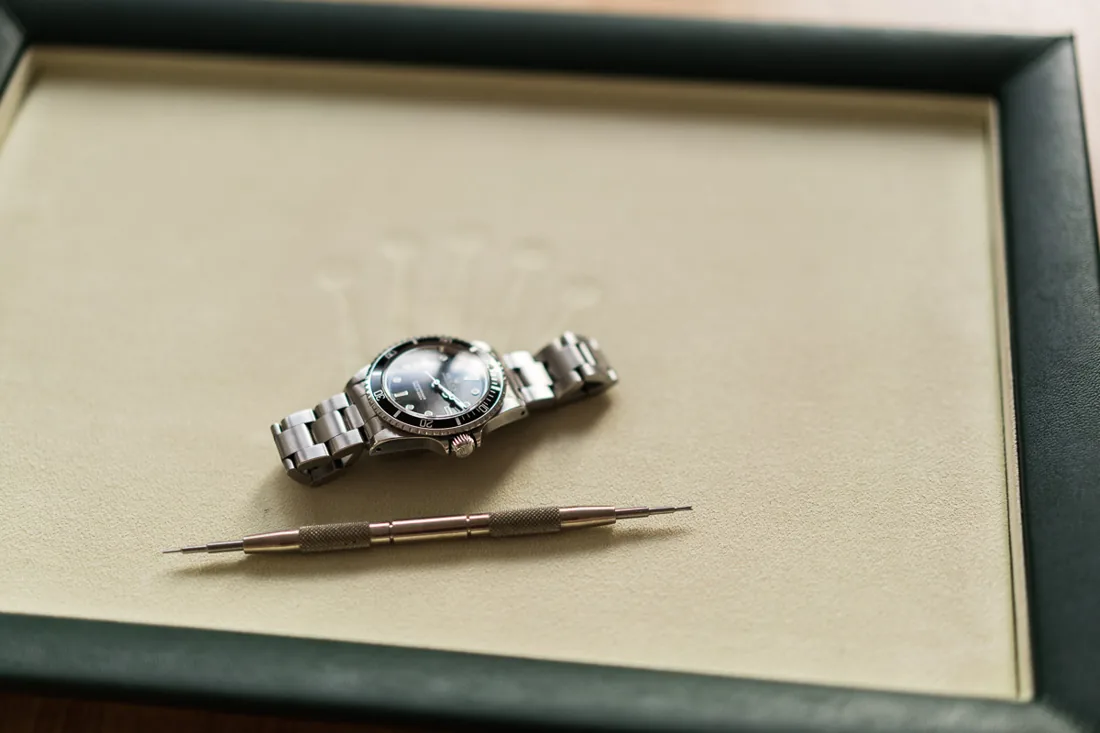
A professional tool for changing bracelets and a small pocketknife are all you need. I'd advise against makeshift tools like toothpicks, especially since the professional tool isn't really expensive. I recommend the Bergeon tool no. 6767 (see picture), which you can get for about 25 euros online or at watch fairs. Alternatively you can use the Sea-Dweller tool from the cover photo, Rolex ref. 2100, which you might still get from an authorized dealer. Not long ago the price was still a reasonable 40 euros or so.
Taking off the old bracelet
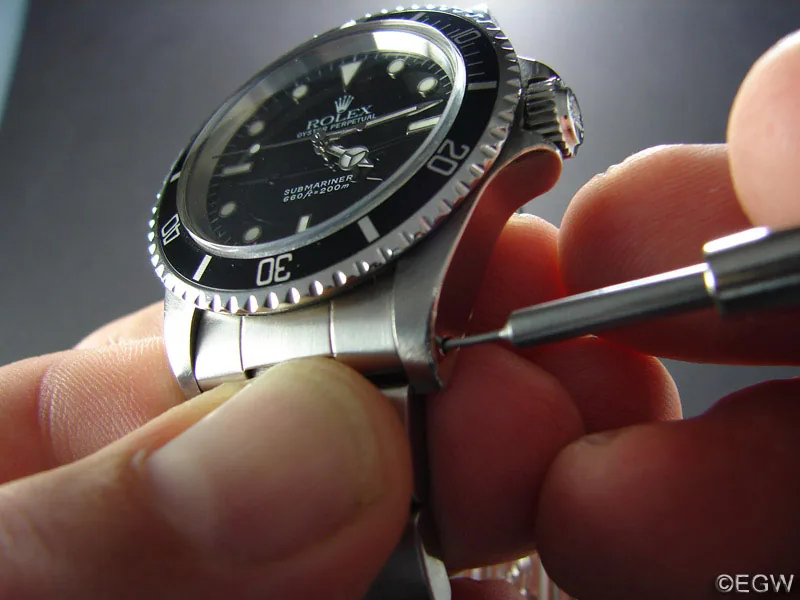
Taking the bracelet off a case with drilled lugs is very easy. Just push the tool described above through the holes and press the bracelet out, preferably downward.
Tape the lugs
Putting the bracelet on is much harder, and there's a lot that can go wrong and leave permanent marks on the watch. If you follow the steps described here, you cut the risk a lot, and it's not quite as complicated as it first seems.
Please note: something can always go wrong. If you work from this guide, you do it at your own risk.
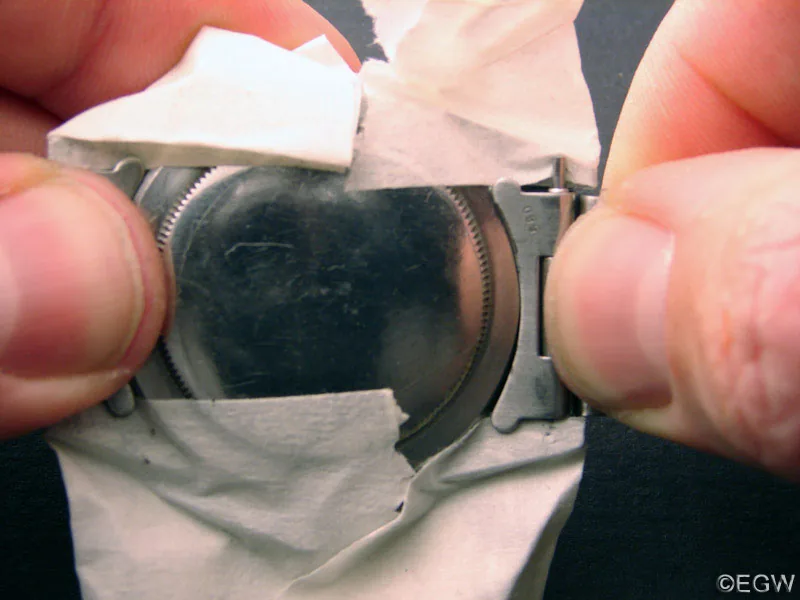
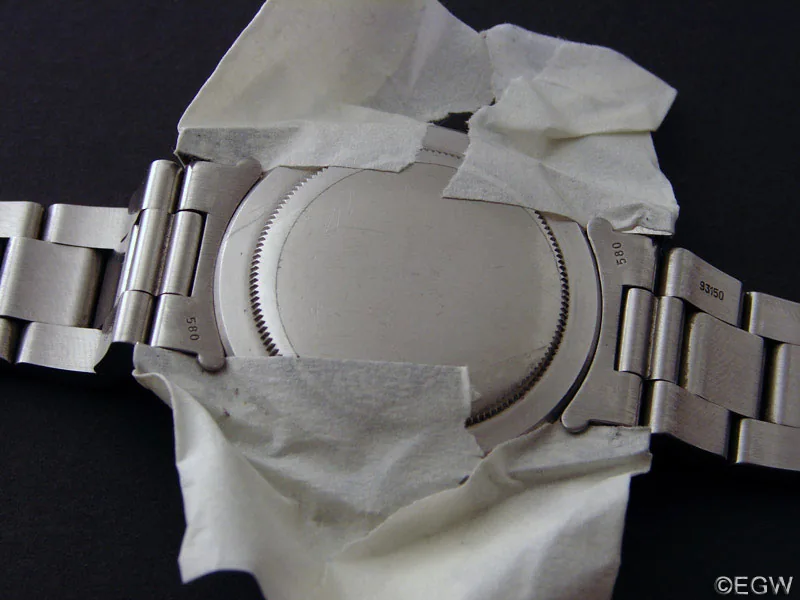
First, tape off the lugs to avoid scratches. This step is important, and now (almost) nothing can go wrong in terms of scratches on the case.

Attaching the bracelet: placing the spring bar
Then lay the bracelet with the end link and spring bar on the case from the back.
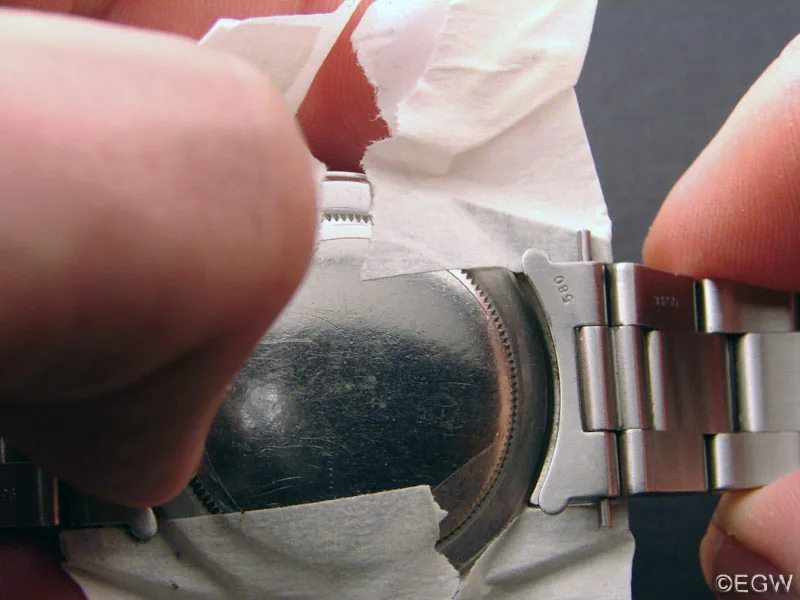
First compress one side of the spring bar and press it between the lugs.
Attaching the bracelet: snapping the spring bar in
Then use the knife to carefully press down the second side and push it between the lugs too. Careful: now gently wiggle the bracelet back and forth and listen for the click. The click tells you the spring bar has locked in place. After all, the bracelet needs to be really secure and not suddenly pop open when you're wearing it and fall to the floor with the watch, just because the spring bars never snapped into their holes.


Attaching the second side
Do the second side exactly the same way as the first. Done! That wasn't so hard, was it?
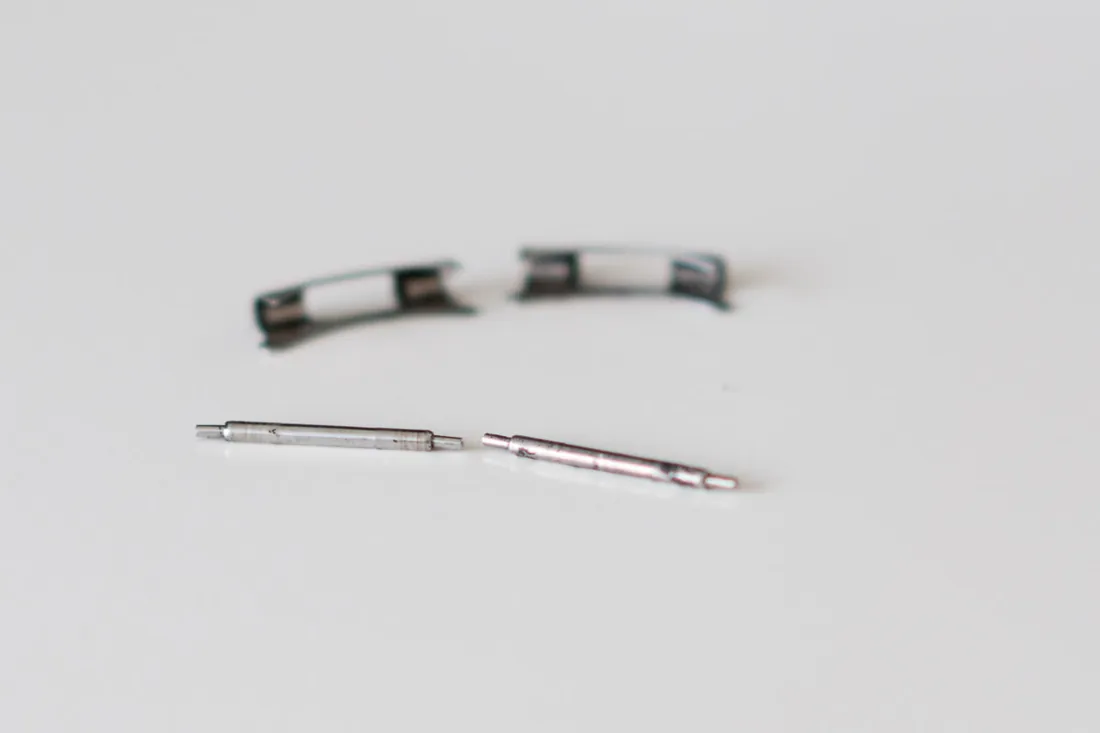
Replacing the spring bars
While you're at it, replace the spring bars too. They take a lot of stress and are the only thing holding the bracelet to the case. The 10 euros per spring bar are worth it, because a lost or dropped watch costs a lot more.